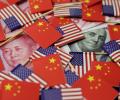
The trade war between the US and China is expected to benefit Indian exporters in increasing their shipments to the American market, sources said. They said the country was the fourth-largest gainer when the US imposed higher duties on Chinese goods during US President Donald Trump's first tenure.

'The West Asia or the Gulf crisis has shown that what we develop as national infrastructure when things are not as bad as they could be, we forget to plan for adversities.'

Prime Minister Narendra Modi visited the Melbourne Cricket Ground, announcing India's aspiration to host the 2036 Olympics and welcoming Chennai's role in the Big Bash League. He emphasised cricket as a strong bond between India and Australia, and both PMs unveiled a Roadmap on Sport Cooperation to deepen bilateral ties beyond cricket.

A potential US-Iran peace deal, expected to be signed on June 19, is anticipated to ease geopolitical stress and benefit various sectors, particularly in India, with analysts suggesting investors await finer details before making significant moves.

Indian equities on Dalal Street saw volatility as global market trends and oil price hike impacted investor sentiment. Track Sensex, Nifty50 movement and key market drivers for Apr 23, 2026.
From the 30-Sensex firms, InterGlobe Aviation, Sun Pharma, Asian Paints, Reliance Industries, Hindustan Unilever, and Tata Steel were among the biggest laggards. However, Trent, UltraTech Cement, Maruti, and Power Grid were among the gainers.

Gold imports climbed 349.22 per cent to $12.07 billion in January, while silver imports rose 127 per cent to $2 billion.

Over the years, India-EU ties have grown, and covered trade, investment, climate change, science and technology, space, digital, mobility, and connectivity.

Indian equity benchmark indices Sensex and Nifty surged significantly in early trade, mirroring a global market rally and a drop in crude oil prices below USD 100 per barrel, driven by renewed hopes of diplomatic engagement between the US and Iran.

Indian stock markets are set to be influenced by ongoing developments in the US-Iran conflict, fluctuations in crude oil prices, and the latest quarterly earnings reports from major corporates, with foreign investor activity also playing a crucial role.

India's proposal to impose retaliatory import duty on certain US products in response to American tariffs on steel and aluminium could cast a shadow over ongoing negotiations for a trade agreement between the two countries, think tank GTRI said on Tuesday. The Global Trade Research Initiative (GTRI) said that if the US engages in consultations with India on the matter or withdraws tariffs, a resolution may be reached.
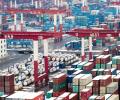
India's trade deficit with China neared $100 billion in FY25, amid escalating concerns of dumping, data released by the commerce department on Wednesday showed. Chinese imports rose by 11.5 per cent to $113.45 billion, while outbound shipments to the neighbouring country saw 14.5 per cent contraction to $14.2 billion.

The escalation of conflict in the West Asian region is expected to push already high logistics costs besides hurting trade in sectors such as oil, electronics and agriculture, according to exporters. They said that insurance costs for exports to the countries directly involved in the war could also go up, which will impact Indian exporters' working capital. Think tank Global Trade Research Initiative (GTRI) stated that the conflict is already hurting India's trade with countries like Israel, Jordan, and Lebanon.

Indian benchmark indices Sensex and Nifty experienced volatility due to conflicting developments in West Asia, including reports of the Strait of Hormuz closure, which led to a rebound in crude oil prices and heightened investor concerns about supply disruptions and inflation.

The United States has announced it will not renew sanctions exemptions for the purchase of Russian and Iranian oil, ending a 30-day waiver that allowed some countries, including India, to continue importing Russian oil despite sanctions related to the Ukraine war.
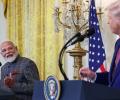
Of Trump's reciprocal tariffs and trade deals

US President Donald Trump's plan to sign an executive order to cut prescription drug prices by 30-80 per cent could lead to a global price adjustment with pharma firms pushing lower-cost countries like India to raise prices, according to the economic think tank GTRI. The US move could push prices in lower-cost countries like India as manufacturers would seek to recover losses and R&D costs from these nations.

The depreciation of Indian rupee against the US dollar is expected to push the country's import bill by about $15 billion, think tank GTRI said on Thursday. Compared to December last year, the Indian Rupee (INR) has depreciated 2.34 per cent against the US dollar, moving from Rs 83.25 to Rs 85.20, while the Chinese Yuan has weakened by 0.06 per cent, the Global Trade Research Initiative (GTRI) said.

China's export curbs on critical minerals crucial for India's electronics sectors are no longer mere warnings but a wake-up call for New Delhi, underscoring the need for urgent measures like reverse-engineering of low- to mid-tech imports to cut overreliance on Beijing, think tank GTRI said on Thursday.

To shield against US President Donald Trump's tariff shock, analysts have been advising investors to focus on stocks of domestic-oriented companies, rather than export-centric ones, to minimise potential losses.

Indian stock markets recovered from early losses to close higher, driven by value buying in IT and banking shares and a rebound in the rupee.
India and the US will sit together in the next couple of weeks to decide on the nature of the proposed trade agreement and finalise its broad contours, a senior official said on Monday. During the recent visit of Prime Minister Narendra Modi to Washington, India and the US announced to more than double the two-way commerce to $500 billion by 2030 and negotiate the first tranche of a mutually beneficial, multi-sector bilateral trade agreement (BTA) by fall of 2025.
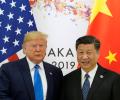
'If you compare the data from 2017 and 2023 of the US imports from the world and China, you will see that the US was a complete loser in the trade war, and China was a complete gainer.'
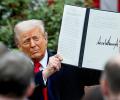
'April 9 announcement of slapping a 125% tariff on Chinese goods has brought the focus back to China, making this new phase feel like a repeat of the original conflict.'

Analysts predict a surge in gold and silver prices as investors seek safe-haven assets due to escalating tensions in the Middle East. The impact on domestic prices will depend on the conflict's duration, with geopolitical factors and macroeconomic data also playing a role.

Brokerage Bernstein has warned Prime Minister Narendra Modi that India risks squandering recent economic gains unless it accelerates structural reforms, particularly in jobs, manufacturing and innovation.
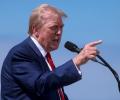
Essential and strategic items such as pharmaceuticals, semiconductors, copper, and energy products like oil, gas, coal and LNG are exempted from the 27 per cent import duty announced by the US on Wednesday, according to think tank GTRI.

Infosys shares experienced a significant drop, hitting a 52-week low, after the company announced its Q4FY26 results and provided a modest revenue growth guidance of 1.5-3.5 per cent in constant currency for FY27, falling below market expectations and raising concerns about AI-led deflation and margin pressures.

The state is in the process of grooming a supplier ecosystem, for which India is almost entirely dependent on imports.

With the new government taking charge in Britain, senior officials of India and the UK will hold the next round of talks this month for the proposed free trade agreement to resolve the pending issues and close the negotiations, an official said. The India-UK talks for the proposed free trade agreement (FTA) began in January 2022. The 14th round of talks stalled as the two nations stepped into their general election cycles.

A US-sanctioned tanker carrying Iranian crude oil has rerouted mid-voyage from its previously indicated destination of India to China, raising questions about payment issues and the future of India's Iranian oil imports.

The Budget has given signals that India is sensitive to the US needs and willing to walk the extra mile, but if need be, we should respond in equal measure as a sovereign nation, notes Ajay Srivastava.

The rupee declined 31 paise to settle at 90.65 against the US dollar on Friday, weighed down by geopolitical uncertainties over the US-Iran talks, and a sharp rise in global crude oil prices.

A host of macroeconomic data announcements, global trends and trading activity of foreign investors would dictate investors' sentiment in the stock market this week, analysts said. Besides, auto sales data will be closely tracked, experts noted.

The US Trade Representative noted that India's average applied tariff rate stood at 17% per cent, the highest of any major world economy.

Restoring weighted tax deductions and adopting a petty patents regime can foster firm-level innovative activity critical for competitiveness, points out Nagesh Kumar.

Domestic exporters on Monday expressed concerns over the crisis in Bangladesh and said the developments in the neighbouring country would have implications on bilateral trade. However, exporters expect that the situation may normalise soon. According to exporters, they are already facing disruptions in exports to Bangladesh due to a shortage of foreign exchange in that country.

The initial public offering (IPO) market in India last year was hot, with companies raising over $22 billion in 2025. But half of the 350-plus companies that listed on the stock exchange last year traded below their offer price, according to a new research report released by HSBC Global Investment Research - a sobering fact despite what otherwise looked like a rush of companies eager to list on the bourses.

Benchmark equity indices Sensex and Nifty rebounded on Thursday after three sessions of losses, tracking gains in global markets after US President Donald Trump struck a conciliatory tone on Greenland. In a volatile session, the 30-share BSE Sensex climbed 397.74 points, or 0.49 per cent, to close at 82,307.37.

Since India relies heavily on specialised imported fasteners for critical applications in industries, such as automobiles, aerospace, electronics, and defence, their sudden unavailability will jeopardise production.
